On-Page SEO vs Off-Page SEO: What’s the Difference
Search Engine Optimization (SEO) is one of the most powerful digital marketing strategies to get your website ranked on Google. But when people talk about SEO, they often mention two terms: On-Page SEO and Off-Page SEO.
If you’re confused about what they mean and how they impact your website, don’t worry—you’re not alone. In this blog, we’ll break down the differences, benefits, and why you need both for better rankings.
🔹 What is On-Page SEO?
On-Page SEO refers to the optimizations you make directly on your website to improve its visibility on search engines. These are elements you can control.
✅ Key Factors of On-Page SEO
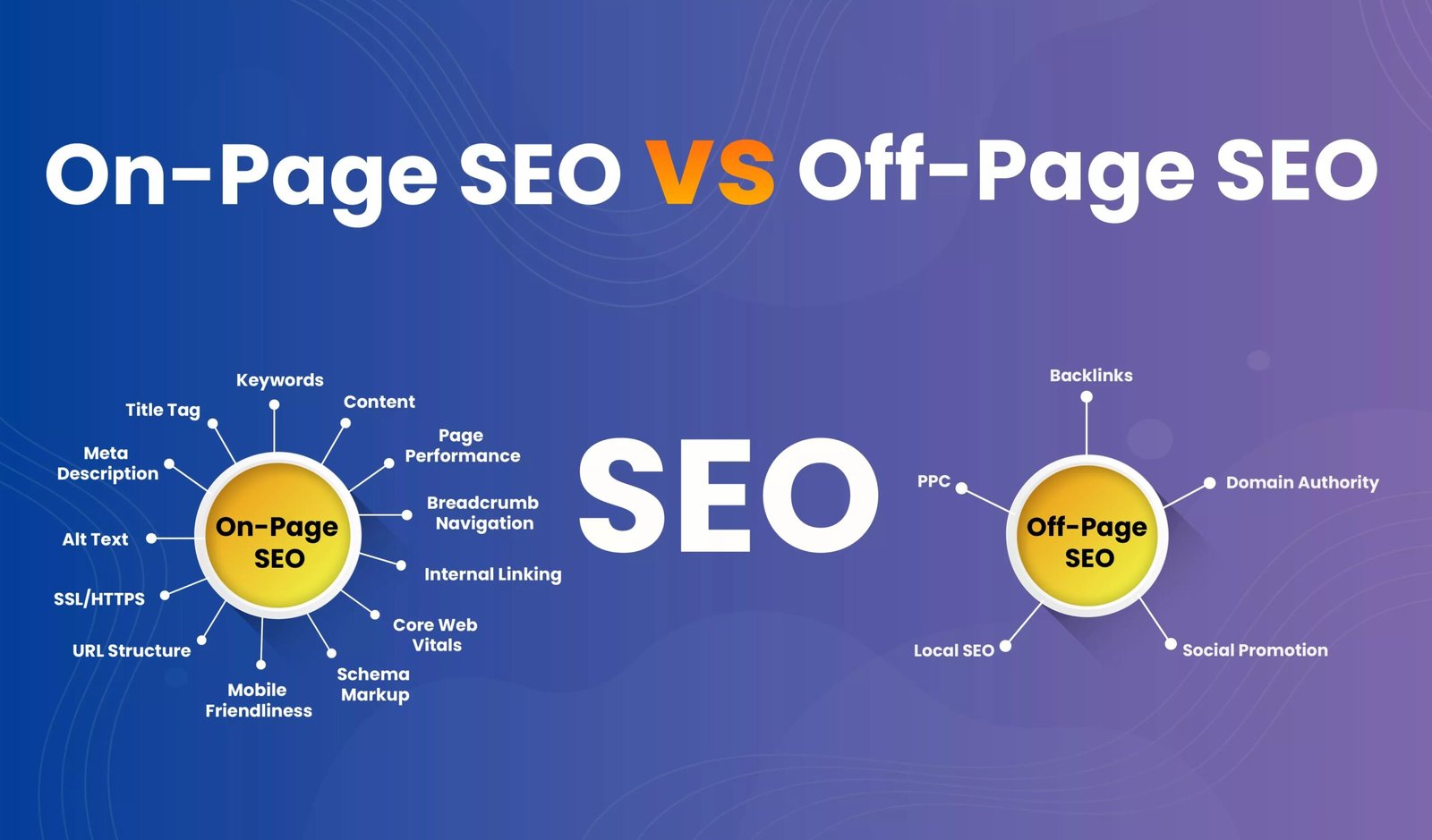
- Title Tags & Meta Descriptions – Writing SEO-friendly titles and descriptions with target keywords.
- Keyword Optimization – Placing relevant keywords naturally in your content.
- Content Quality – Creating valuable, original, and user-focused content.
- Internal Linking – Linking pages within your own website to improve navigation and authority.
- URL Structure – Keeping URLs short, clean, and keyword-rich.
- Image Optimization – Using alt tags and compressed images for faster load speed.
- Mobile-Friendly Design – Ensuring your site works smoothly on smartphones and tablets.
- Page Speed – A fast-loading site improves rankings and user experience.
👉 Think of On-Page SEO as everything you can fix inside your house to make it more attractive to guests.
🔹 What is Off-Page SEO?
Off-Page SEO refers to the actions you take outside of your website to improve its authority, trustworthiness, and ranking power.
✅ Key Factors of Off-Page SEO
- Backlinks – Getting quality links from other websites that point to your site.
- Guest Blogging – Publishing articles on other websites to build authority and links.
- Social Media Signals – Engagement on platforms like Facebook, LinkedIn, Instagram, and Twitter.
- Brand Mentions – When your brand is mentioned on blogs, forums, or news sites.
- Influencer Outreach – Collaborating with influencers to increase brand visibility.
- Online Reviews – Positive ratings on platforms like Google Business Profile, Yelp, etc.
👉 Think of Off-Page SEO as your reputation outside the house—what people say about you in the neighborhood.
🔹 On-Page SEO vs Off-Page SEO: Key Differences
| Feature | On-Page SEO | Off-Page SEO |
|---|---|---|
| Location | Optimizations within your website | Efforts outside your website |
| Focus | Content, structure, user experience | Authority, reputation, backlinks |
| Control | 100% under your control | Influenced by external factors |
| Examples | Keywords, meta tags, speed | Backlinks, guest posts, social signals |
Both are essential—On-Page SEO helps your website look good to search engines, while Off-Page SEO builds your website’s credibility and authority.
🔹 Why Do You Need Both?
Many business owners ask: “Should I focus more on On-Page or Off-Page SEO?”
The truth is: you need both.
- Without On-Page SEO → Your website won’t be optimized for search engines.
- Without Off-Page SEO → Your website won’t build authority to compete with others.
👉 Example: A perfectly designed website with no backlinks will struggle to rank. Similarly, a site with lots of backlinks but poor content won’t keep users engaged.
🔹 Final Thoughts
The difference between On-Page SEO and Off-Page SEO comes down to control vs influence. On-Page SEO makes your website search engine-friendly, while Off-Page SEO builds the trust and authority needed to rank higher.